
As Ramadan 2026 began, my reflections turned to something important: Ramadan is not only a month in which Allah allows us to settle our affairs with Him as a first step toward taqwa, but also a month that allows us to rediscover our power and capacity in a unique way.
One of Shaitaan’s many tricks is to whisper that we are lesser than we truly are, and that we are incapable of accomplishing much. We begin to believe this, and we feed ourselves negative self-talk. Over time, this repeated negativity can lead to what Martin Seligman, in the 1960s, called “learned helplessness.” This is a psychological condition in which a person comes to believe they have no control over a situation, even when they actually do, and therefore stops trying to change it.
Learned helplessness often develops through repeated negative experiences such as failure, criticism, trauma, or a lack of control. Eventually, it becomes cemented into a belief that says, “I can’t change this,” or “I am not capable,” or “there is no point trying.” The final stage is that we do not act even when opportunities appear, because we believe we cannot win. We start to think we cannot memorize the Qur’an, cannot give a good public speech, and cannot learn the Arabic language. The dreams we once had for ourselves get lost in apathy and a lack of self-esteem.
In the Qur’an, Allah constantly reminds believers of their strength. He says:
“So do not weaken and do not grieve, and you will be superior if you are [true] believers.” Surah Aali-Imran (3:139)
“How many times has a small company overcome a large company by permission of Allah. And Allah is with the patient.” Surah Al-Baqarah (2:249)
“If there are twenty patient ones among you, they will overcome two hundred…” Surah Al-Anfal (8:65–66)
Yet, despite these inspiring words, Shaitaan can still slowly beat us down until we set the bar so low for ourselves, as if lowering expectations will compensate for a weakened belief in our ability to accomplish great things.
Then, when all seems lost, Ramadan arrives and gives us a chance to regain our optimism and confidence, and to reignite our passion and pride in contributing to a better world. Ramadan comes like a loud wake-up call. It forces our attention and disrupts the status quo. It shakes up our work schedules, food habits, prayer routines, and so much more. We are pushed to pause our complacency and listen to its call. And then something amazing happens: we respond. Apathy turns into energy.
Here are eight ways Ramadan allows us to rediscover our power and value by challenging the assumptions we have settled into:
Time
Almost everyone today feels trapped in a time crunch. We are busier than ever, yet we feel we have less and less time to do what we want and what we must do. This is especially ironic because we live in an age where technology gives us countless time-saving tools. We press a button and cooked food arrives. Transportation shows up in minutes. Yet we still tell ourselves we have no time.
Then Ramadan comes, and suddenly we find time to recite the entire Qur’an in a month, to go to the masjid every night for hours, and to pray twenty rak’aats of taraweeh. Where did this extra time come from? Ramadan does not bring more time. Rather, it teaches us the power of priority. We make time for whatever we deem most important. Ramadan reminds us what truly matters in our lives.
Socializing
The daily grind makes it difficult to socialize and to spend time with friends and family. Many of us choose the lonely option of TV, video games, and social media as a substitute for companionship. Over time, we lose our desire for real human connection.
Ramadan pushes us to come together and break the fast with fellow believers, to interact and enjoy one another’s presence, brotherhood, and love. It brings us to the house of Allah to experience its blessing. It helps us reconnect with our families and communities in ways we may have neglected throughout the year.
Food
Many of us struggle with our eating habits, and that struggle can make us lose hope of ever developing a healthier relationship with food. Ramadan comes and shows us that we do have the power to control ourselves, including our relationship with food. It demonstrates the discipline we are capable of, and it helps us see food for what it truly is: a blessing.
As we change our relationship with food in Ramadan, we learn that we can change our relationship with any of Allah’s blessings, moving from taking them for granted to appreciating them deeply.
Qur’an
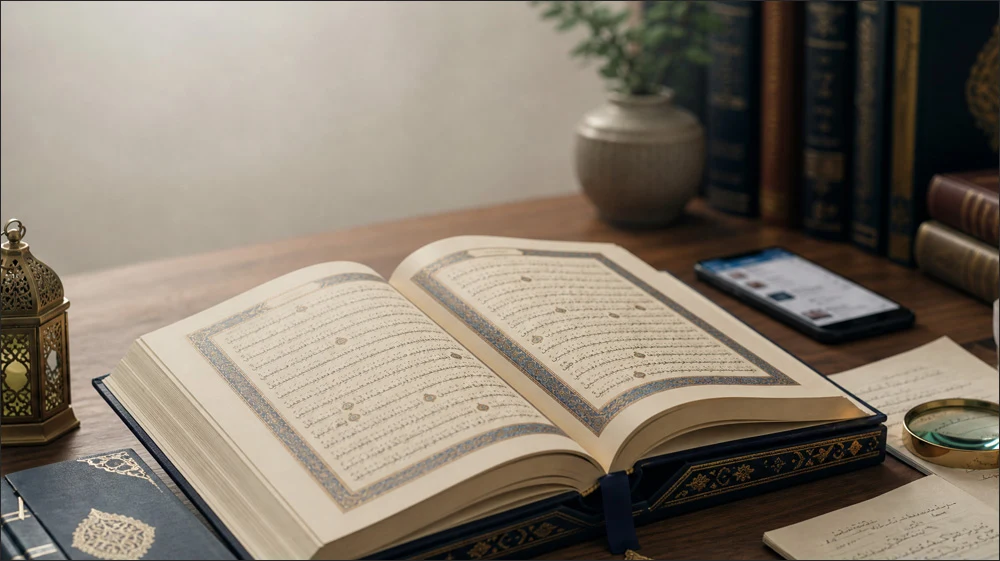
Throughout the year, very few of us maintain a consistent daily practice of reciting the Qur’an. For many, it sits on a shelf as decoration. Then Ramadan arrives and something revives in the heart. The nightly recitation of the Qurraa (reciters) in taraweeh moves our souls again. We rediscover our love for the Book of Allah, and we find ourselves returning to it, opening it, and reciting it once more.
Vices and bad habits Over the year, the status quo can become an acceptance of our vices and bad habits. Many of us quietly give up on changing them. Then Ramadan comes and awakens remorse and guilt to such a degree that even people who drink alcohol or smoke cigarettes often stop for the month.
“Whoever does not give up false speech and acting upon it, and ignorance, then Allah has no need of him giving up his food and drink.” (Sahih al-Bukhari)
This includes backbiting, slander, insults, cursing, and harsh argumentation.
Money
Shaitaan promises us poverty if we spend, but sadaqah (charity) is burhaan (evidence of faith). Throughout the year, we can become reluctant to spend our wealth on those less fortunate. Allah says:
“O you who believe! Give of the good things you have earned, and from what We have produced for you from the earth. And do not pick the inferior things to give away, when you yourselves would not accept it except with eyes closed. And know that God is Sufficient and Praiseworthy. Satan promises you poverty, and urges you to immorality; but God promises you forgiveness from Himself, and grace. God is Embracing and Knowing.” Surah Al-Baqarah (2:267–268)
Ramadan brings glad tidings about the blessings of giving, and we rediscover generosity. We share more in this month than any other, supporting the poor and the needy.
Watching
TV and media Many of us feel glued to our favorite shows, or to endless scrolling through videos on our phones. Sometimes it even causes us to miss our daily salah. Then Ramadan comes and convinces us that we should be in the masjid instead. It nudges us to switch to Qur’an apps, and to spend time listening to Islamic reminders and talks.
Slowly, we begin to realize how shallow our habits can become, and how much time we waste on things that will not benefit us in the next life.
Imaan
Most of us believe our imaan needs polishing and strengthening. Yet it is often only when Ramadan arrives that we realize how strong our faith truly is. We see it reflected in the actions we are able to take during this month, and that helps us begin to believe in our own belief. Ramadan renews our respect for our imaan.
In closing, I truly believe Ramadan disrupts our status quo in order to repair our damaged souls and realign our paths toward Allah. It helps us believe again in our power and capacity. It gives us a chance to recognize “learned helplessness” and free ourselves from its chains. It restores pride in us as believers and renews our confidence to pursue any dream with optimism once again.
May Allah accept all of our striving during this blessed month.
About the Author

Imam Naseeb Khan
Naseeb Khan was born in Guyana and is one of the founding members of the Guyana Islamic Trust and its first Ameer. He has been involved in the da’wah and youth work for over forty years and was Imam of Nur ul Islam, Florida for the past ten years.
He is an author and has written several books and articles on Islam. Among them are “The Islamic Meeting”, “Tried and Tested” and “Ramadan 101 for busy Muslims”.